
How to Maintain Tile Floors in High Traffic Areas
Tile floors are a popular choice for offices, retail stores, restaurants, schools, and healthcare facilities. They are durable and easy to work with. But in high traffic areas, that durability depends entirely on how well you maintain them.
Without a proper routine, foot traffic grinds dirt into the surface, grout lines absorb stains, and tiles lose their appearance far sooner than they should. Many facility managers are also surprised to discover how to clean floor tile grout without scrubbing, which saves time and effort during routine upkeep. A consistent maintenance plan protects your investment, keeps your space looking professional, and reduces long term replacement costs.
Why Tile Floors Wear Down Faster in Busy Areas
Every footstep brings in dirt, grit, and debris. In a lobby, hallway, or commercial kitchen, that buildup accumulates fast.
Fine particles act like sandpaper on tile surfaces. Over time, they scratch the glaze, dull the finish, and weaken grout lines. Once grout starts to crack or crumble, moisture gets underneath the tile and causes structural damage that is expensive to repair. Catching this early through regular maintenance is far cheaper than replacing entire floor sections.
Daily Cleaning Habits That Make a Real Difference
Sweep or Dust Mop Every Day
The single most effective habit for high traffic tile floors is daily dry cleaning. Use a soft bristle broom or microfiber dust mop to remove loose dirt and debris before it gets ground into the surface. This step alone significantly slows the rate of surface wear and keeps grout lines cleaner between deep cleans.
Mop With the Right Cleaning Solution
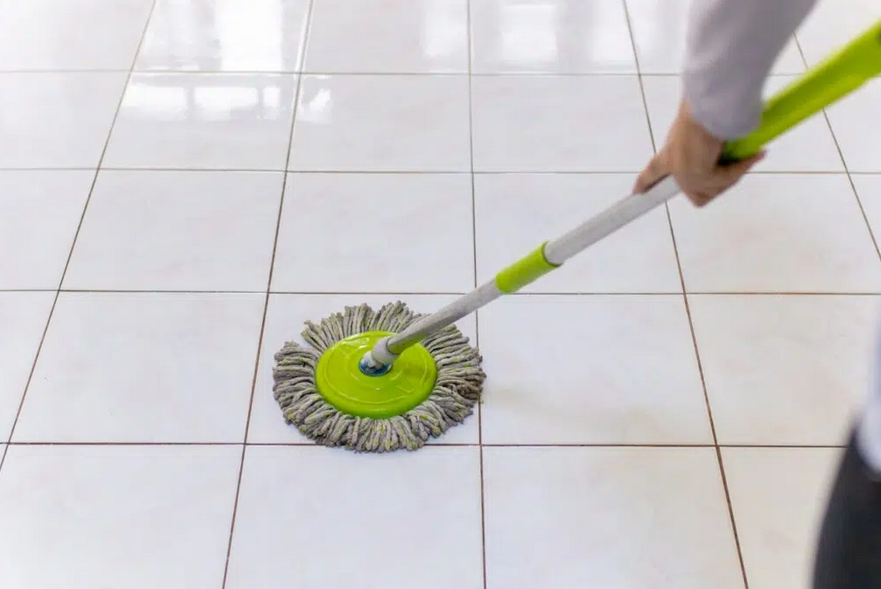
After dry cleaning, mop with a pH-neutral cleaner designed for tile. Avoid bleach, ammonia, or acidic cleaners as these erode grout sealer over time and can discolor certain tile types. Use a damp mop rather than a soaking wet one. Excess water sitting in grout lines weakens the sealer and can lead to mold growth beneath the surface.
In restaurants and healthcare facilities, a hospital-grade neutral disinfectant is appropriate. Always rinse after mopping to remove cleaner residue, which attracts more dirt and creates slip hazards.
Grout Maintenance Is Not Optional
Grout is porous by nature. Without protection, it absorbs spills, cleaning chemicals, and bacteria. Discolored grout is one of the most common complaints in commercial buildings, and it almost always comes down to skipped sealing.
Apply a penetrating grout sealer after installation and reseal every six to twelve months. Entryways, restrooms, and dining areas may need resealing more frequently. The grout must be fully clean and dry before sealing since sealing over dirty grout locks stains in permanently.
For stubborn grout stains, use a soft nylon brush with a pH-neutral grout cleaner. Understanding what professional grout cleaning methods and products involve can help you choose the right approach for your facility. Never use wire brushes or abrasive pads as they scratch tile surfaces and damage grout texture, making future staining worse.
Address Spills and Moisture Immediately
Standing water is one of the biggest threats to commercial tile floors. Liquid seeps into grout, weakens adhesive bonds beneath tiles, and promotes mold and mildew growth. In restaurants and healthcare settings, this also creates serious hygiene risks.
Train staff to clean up spills right away using an absorbent cloth or mop. Avoid letting liquid sit longer than a few minutes. In areas prone to moisture such as restrooms, kitchens, and building entrances, increase mopping frequency during wet weather to prevent buildup.
Slip and Fall Prevention in Commercial Spaces
Wet tile floors are a leading cause of workplace injuries and liability claims. The risk increases when floors are cleaned but not properly rinsed, leaving behind a soapy residue that makes surfaces more slippery than before cleaning.
Use tiles rated for slip resistance in wet areas. The Dynamic Coefficient of Friction (DCOF) rating should be 0.42 or higher for commercial wet interior floors. Place wet floor signs whenever mopping and allow floors to dry completely before reopening the area. In high risk zones, choose matte or textured tile finishes rather than polished surfaces, which lose traction when wet.
Place Entry Mats at Every Entrance
Entrance mats are one of the most cost-effective tile protection tools available. A quality scraper mat outside and an absorbent mat just inside each entrance can trap up to 80 percent of tracked-in dirt and moisture.
Clean and replace entrance mats regularly. A dirty, saturated mat stops doing its job and becomes a source of contamination rather than protection. In wet climates or during rainy seasons, use larger mats and clean them more often.
Schedule Professional Deep Cleaning Regularly
Routine mopping keeps surface dirt manageable but cannot reach grime embedded deep in grout lines. Professional hot water extraction and steam cleaning remove what daily maintenance cannot.
Recommended professional cleaning intervals for commercial spaces:
- Offices and retail stores: every 6 to 12 months
- Restaurants and food service areas: every 1 to 3 months
- Healthcare facilities: every 1 to 2 months
- Schools and public buildings: every 3 to 6 months
After deep cleaning, have grout resealed while the lines are fully clean. This is the most effective time to apply sealer and gives you the longest lasting protection.
Inspect Tiles and Grout on a Set Schedule
Cracked tiles and deteriorating grout do not fix themselves. A small crack allows moisture underneath the floor, which expands damage to surrounding tiles quickly. Set a monthly inspection schedule to check for loose tiles, crumbling grout, and discoloration. Address repairs as soon as they appear to prevent costly section replacements.
Frequently Asked Questions
How often should commercial tile floors be professionally cleaned?
It depends on foot traffic and the type of facility. Restaurants and healthcare spaces need professional cleaning every one to three months. Offices and retail stores typically need it every six to twelve months. High traffic lobby areas may need quarterly attention regardless of building type.
What cleaning products are safe for commercial tile floors?
Always use pH-neutral cleaners designed for tile and grout. Avoid bleach, ammonia, vinegar, and anything abrasive. These strip grout sealer, dull the tile finish, and can create slip hazards if residue is left behind.
How often does grout need to be resealed in high traffic areas?
Grout in high traffic commercial spaces should be resealed every six to twelve months. Entryways, restrooms, and dining areas may need resealing more frequently. A simple water bead test confirms whether sealer is still active. If water soaks into the grout instead of beading up, it is time to reseal.
What is the best tile finish for high traffic commercial floors?
Matte and textured finishes offer better slip resistance than polished or glossy tiles, especially in wet conditions. Porcelain is the most durable option for commercial spaces due to its low porosity, high resistance to staining, and ease of maintenance.
